Retro Name Compatibility Games: Paper & Pen Romance
Relive the charm of the classic name compatibility game on paper. Discover fun, handwritten methods to test your relationship names and enjoy nostalgic romance predictions.
Remember the days before smartphones, when a simple spiral notebook held your deepest romantic secrets? Whether you were in the back of math class, at the local park, or whispering late at night with friends, playing a name compatibility game on paper was the classic way to see if you and your latest crush were meant to be. These handwritten games brought suspense, laughs, and a little everyday magic.
Today, we are revisiting these charming offline activities. From striking out matching vowels to working out number-based destiny scores, this guide will walk you through the most loved paper-and-pen romance tests. Whether you want a trip down memory lane or a fun activity for date night, grab a pen and explore the timeless world of handwritten romance.
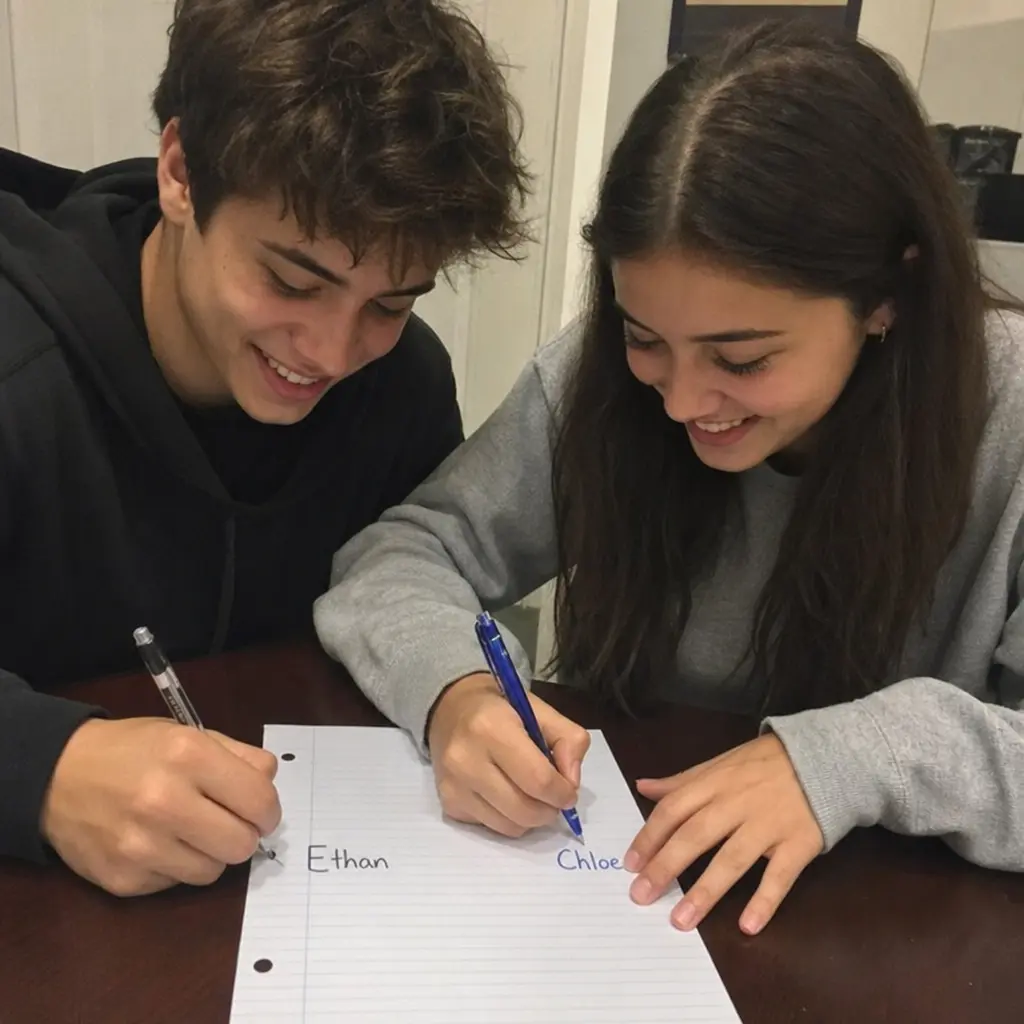
The magic of offline romance
In our fast-paced digital age, it is easy to download an app that uses hidden algorithms to tell you if you and your partner are a perfect match. However, there is a distinct, clear charm to the manual approach. When comparing a paper love calculator with mobile apps, the paper method wins every time for nostalgia, personal feel, and social fun. There is a deeply tactile joy in writing out names, crossing off letters, and counting down to a final, suspenseful answer.
Furthermore, these offline activities offer a great way to test romantic synergy without tech. They encourage eye contact, natural conversation, and shared laughter. You are not just staring at a glowing screen and waiting for a loading bar to hit 100%; you are helping create the result. That interactive feel makes these games ideal icebreakers for new couples, fun pastimes for long-time partners, or lively group games.
The classic FLAMES game
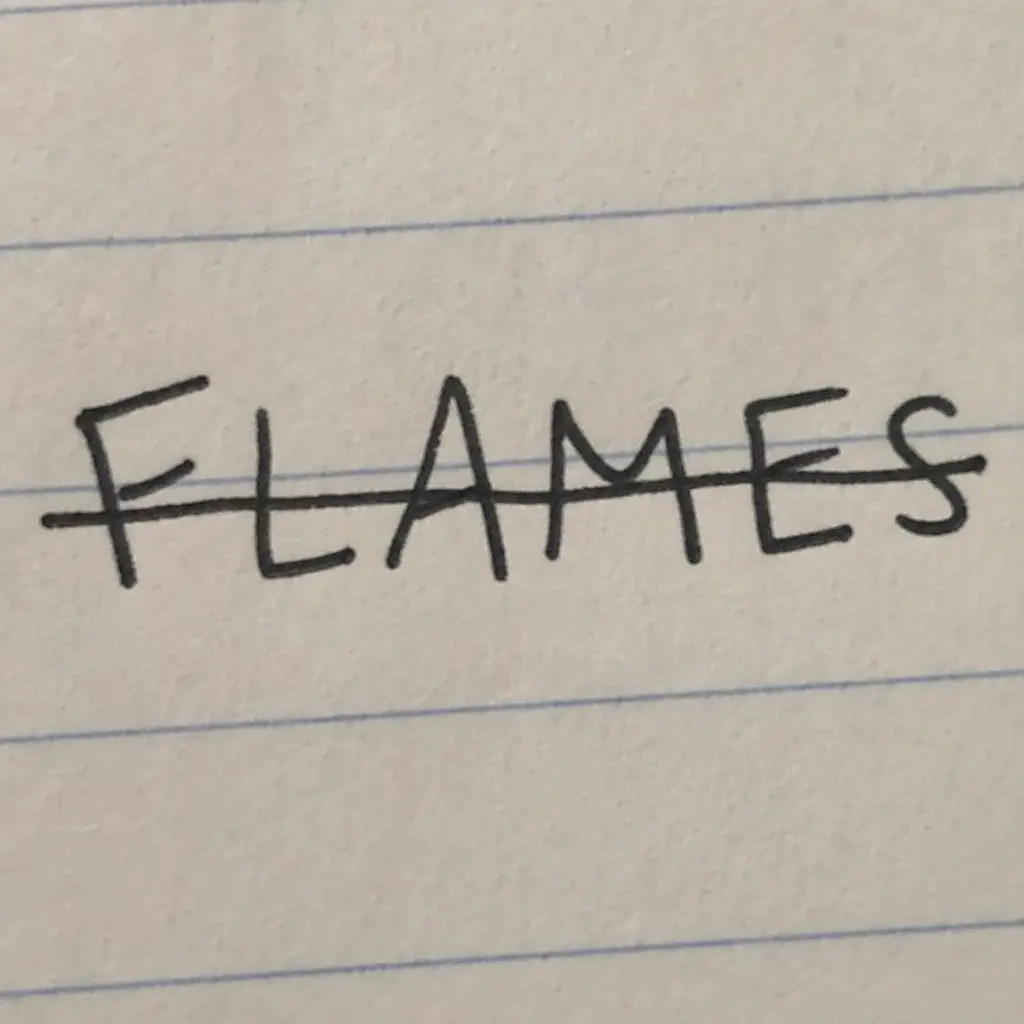
If there is one undisputed king of the name compatibility game, it is FLAMES. This beloved pastime has been a staple in middle schools and high schools across the globe for decades. But what exactly are the FLAMES game rules and meaning? Let us break down this classic, time-honored method.
FLAMES is a simple acronym, with each letter standing for a different type of relationship outcome:
- F - Friends: You and your crush will have a strictly platonic relationship.
- L - Lovers: A deep, passionate romance is in your future.
- A - Affection: You have mutual fondness and emotional warmth.
- M - Marriage: The ultimate commitment—you are destined to tie the knot.
- E - Enemies: It is best to stay away from each other completely!
- S - Siblings / Soulmates: A familial bond in classic mode or cosmic match in modern mode.
How to play FLAMES
To play, write down your first name and your crush's first name on a piece of paper. Cross out all the letters that your two names share. For example, if the relationship names are MARK and MARY, you would cross out the shared M, A, and R. Mark is left with K (1 letter), and Mary is left with Y (1 letter). Add the remaining uncrossed letters together (1 + 1 = 2).
Next, write out the word FLAMES. Start counting the letters in FLAMES up to your total number (2). In this case, F is 1, L is 2. Cross out the L. Keep counting the remaining letters (A is 1, M is 2), crossing out the 2nd letter each time, until you are left with only one letter. That final remaining letter tells you your relationship status.
For an in-depth tutorial with full worked examples, read our dedicated How to Play FLAMES with Names tutorial.
The percentage love calculator
While FLAMES gives you a broad relationship category, sometimes you just want a cold, hard metric to judge your romance. This is where the math approach comes in. If you have ever wondered how to calculate love percentage using names by hand, you are in for a treat. This math method acts as a very engaging DIY compatibility checker.
- Write the sentence:Write your first and last name, followed by the word LOVES, followed by your crush's first and last name. For example: JANE DOE LOVES JOHN SMITH.
- Count the frequencies:Look at the first letter of the sentence (J). Count how many times the letter J appears in the whole sentence. In this case, it appears 2 times, so write the number 2 below the first letter. Cross out all the J's. Move to the next uncrossed letter (A), count its frequency, write the number down, and cross it out. Keep going until you have a string of numbers under your sentence.
- Add the edges: Take the first number in your new row and the last number, and add them together. Write this new number on a new line. Then add the second number and the second-to-last number. Keep going inward toward the center until you have a shorter row of numbers. If you have a middle number left over, just drop it straight down to the new line.
- Repeat and reduce: Repeat this addition process—adding the outside numbers inward—on your new row. Keep repeating this exact step, creating shorter and shorter rows, until you are finally left with a two-digit number.
- The result: That final two-digit number is your official love percentage.
MASH: the ultimate fortune teller
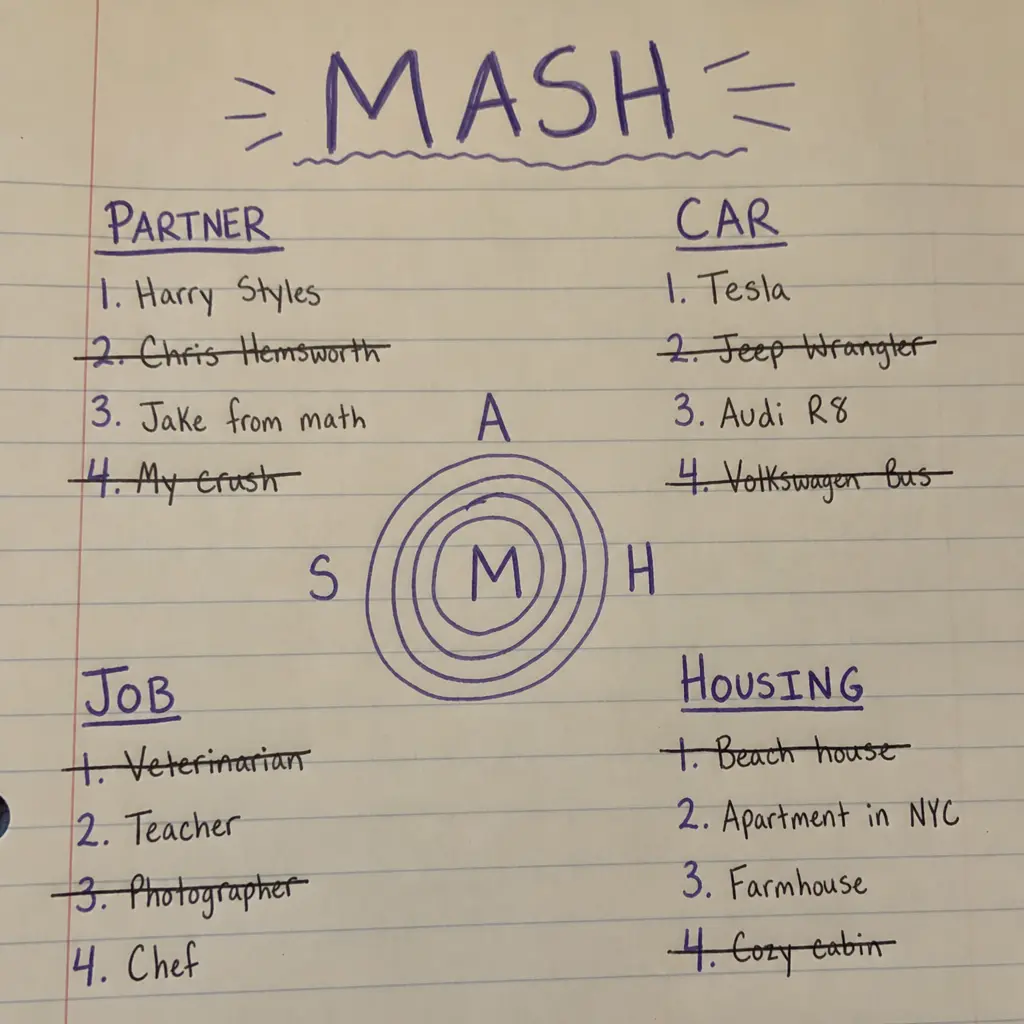
No full guide to paper games would be complete without mentioning MASH. While it goes beyond just analyzing names, it still relies on predicting relationship outcomes with pen and paper. It is a legendary staple among fun handwriting games for sleepovers, letting players imagine their whole adult lives in just a few minutes.
- The categories: Write M.A.S.H. (Mansion, Apartment, Shack, House) at the top of your page. Below it, create four clear categories: Partners, Number of Kids, Job, and Car.
- The options: Write four options for each category. For the Partners section, this is where you test your relationship names. You might write your current crush, a famous celebrity, a close friend, and someone completely random to keep things hilarious and wild.
- The magic number: The person whose fortune is being told closes their eyes while the game master draws a spiral on the paper. The person says Stop!, and the game master counts the rings in the spiral to get the magic number. Let us say the number is 5.
- The cut: Start counting through all the options on the page (including the four letters in M.A.S.H.), crossing off every 5th item. Continue going around the board in a circle, skipping items that are already crossed out, until only one option is left in each category.
Number and name analysis
If you want something a bit more advanced than schoolyard games, you can dive into number-based name analysis for couples. This method borrows from old beliefs that numbers carry unique vibes, energy, and meaning. It acts as an intriguing, deeply personal compatibility test for those who enjoy a touch of mystique.
To start calculating soulmate connection using letters, you must assign a number to every letter in both of your names based on the standard Pyth chart:
- 1 = A, J, S
- 2 = B, K, T
- 3 = C, L, U
- 4 = D, M, V
- 5 = E, N, W
- 6 = F, O, X
- 7 = G, P, Y
- 8 = H, Q, Z
- 9 = I, R
Convert all the letters in your full birth name to numbers and add them up. If the total is a double-digit number (like 24), add those digits together (2 + 4 = 6) until you reach a single root number between 1 and 9. Do the same math for your partner.
Frequently Asked Questions
Why try pen-and-paper romance games instead of a phone app?
Paper games feel more personal, social, and nostalgic. Writing names, crossing out letters, and counting together creates eye contact, conversation, and shared laughter.
How do you play FLAMES, and what do the letters mean?
Write both first names, cross out any shared letters, then add the number of letters left over. Write FLAMES and count around the letters up to your total, crossing out the letter you land on each time until only one remains. The final letter reveals your fate: F = Friends, L = Lovers, A = Affection, M = Marriage, E = Enemies, S = Siblings/Soulmates.
Do these compatibility tests actually work?
In science, no—letters in a name do not determine relationship outcomes. Socially, yes—they are excellent conversation starters that spark laughter and bonding moments.
Ready to try the modern version?
If you want the instant digital version of the same playful idea, the FLAMES Calculator is available right on the home page. Enter two names, get your result, and share the fun in seconds.